Gulf Airspace Warning: Flying Via the Gulf? Read This First
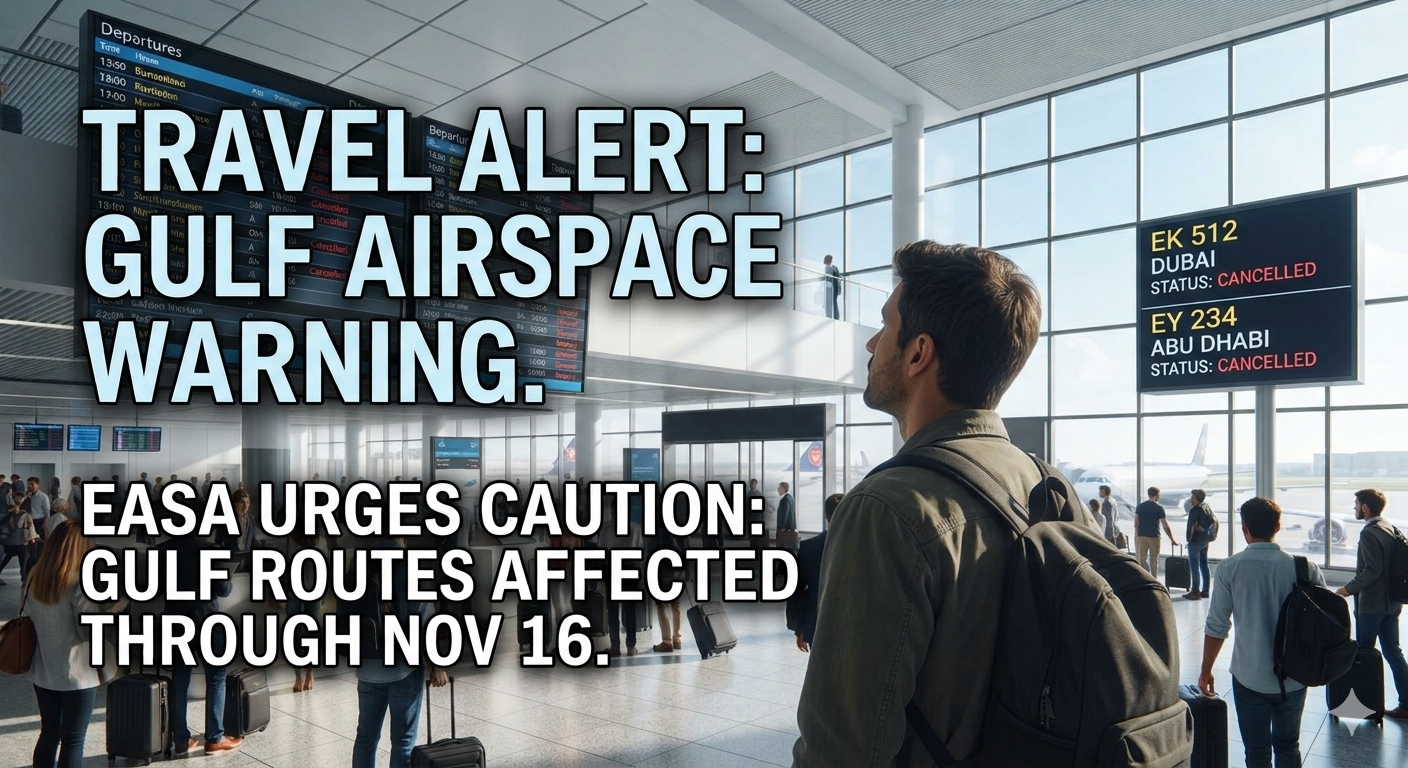
European regulators have asked airlines to avoid parts of Gulf airspace until at least 16 November. Airports are open, but some flights are being cancelled.
On 30 September 2026, EASA, the European aviation safety regulator, told European airlines and non-EU airlines serving Europe to avoid parts of Gulf airspace through at least 16 November. The reason given is the security risk to civil flights, linked to wider tensions between Iran and the United States. This is a warning to airlines, and it does not close any airports.
Are airports still open?
Yes. All three UAE airports are open. But there has been real disruption on some routes. Etihad cancelled flights between Abu Dhabi and Dammam, Jeddah and Riyadh from 11 to 13 October, including return services. flydubai cancelled flights to Riyadh, Dammam and Abha through 14 October. Reports from those days also mention nearly 1,500 cancellation listings across the affected airports, with some overlap between connecting flights.
Why this matters for Indian travellers
A lot of India to Europe and India to North America trips connect through the Gulf. When airlines avoid certain airspace, they take longer routes. That can mean longer flying times, changed schedules and a higher chance of missing a connection. It can also push fares up when seats on other routes fill quickly.
If you are already booked
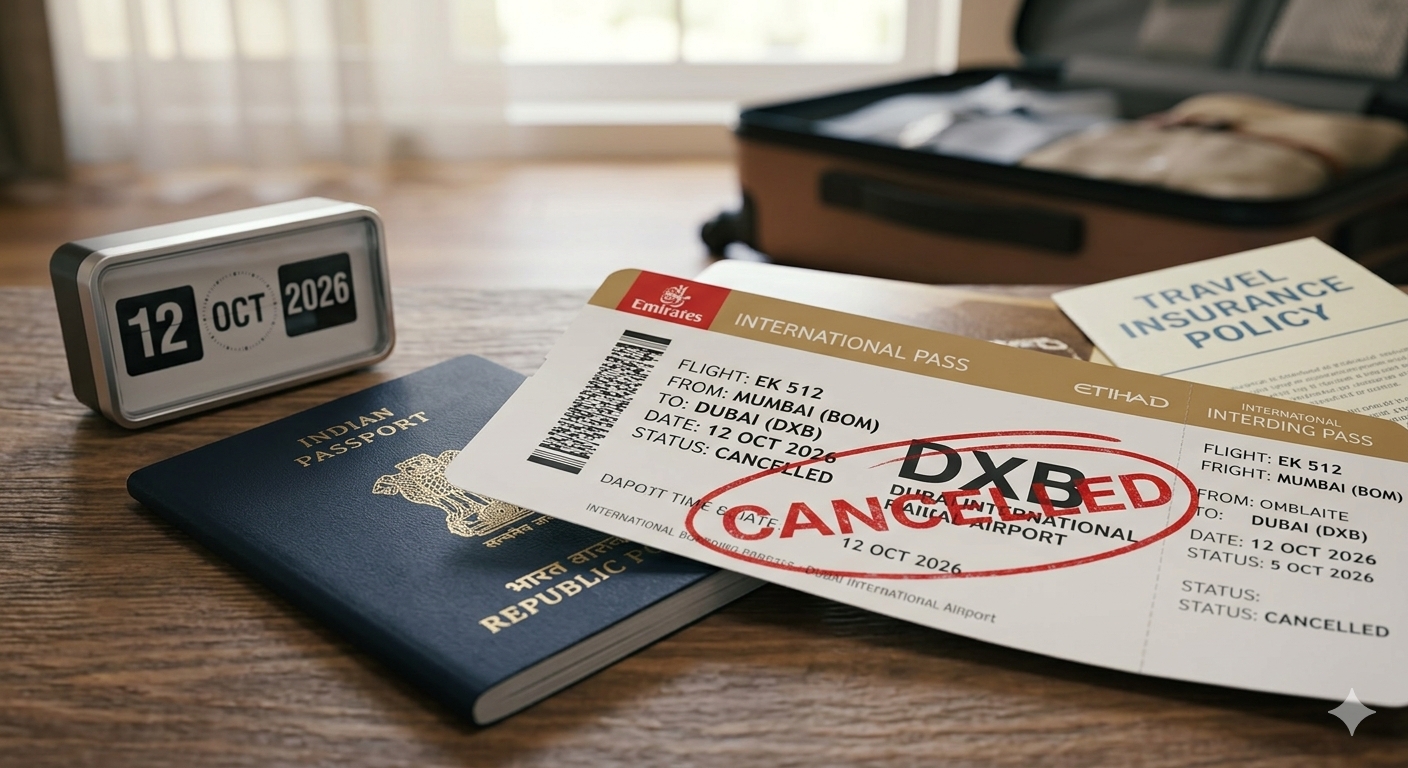
Check your booking with the airline a few days before you fly and again on the day. If your flight is changed by more than a few hours, ask for a free rebooking or refund. Do not wait until you reach the airport to find out.
If you are still booking
Compare one-stop options through other hubs, and keep a longer gap between connecting flights, ideally a few hours rather than the minimum. Travel insurance that covers disruption is worth having on these routes. The warning runs until at least 16 November, so anything after that date can still change.
Comments
Log in to view and join the conversation
Log in