Europe's New Border Rules: What EES and ETIAS Mean for Your Next Trip
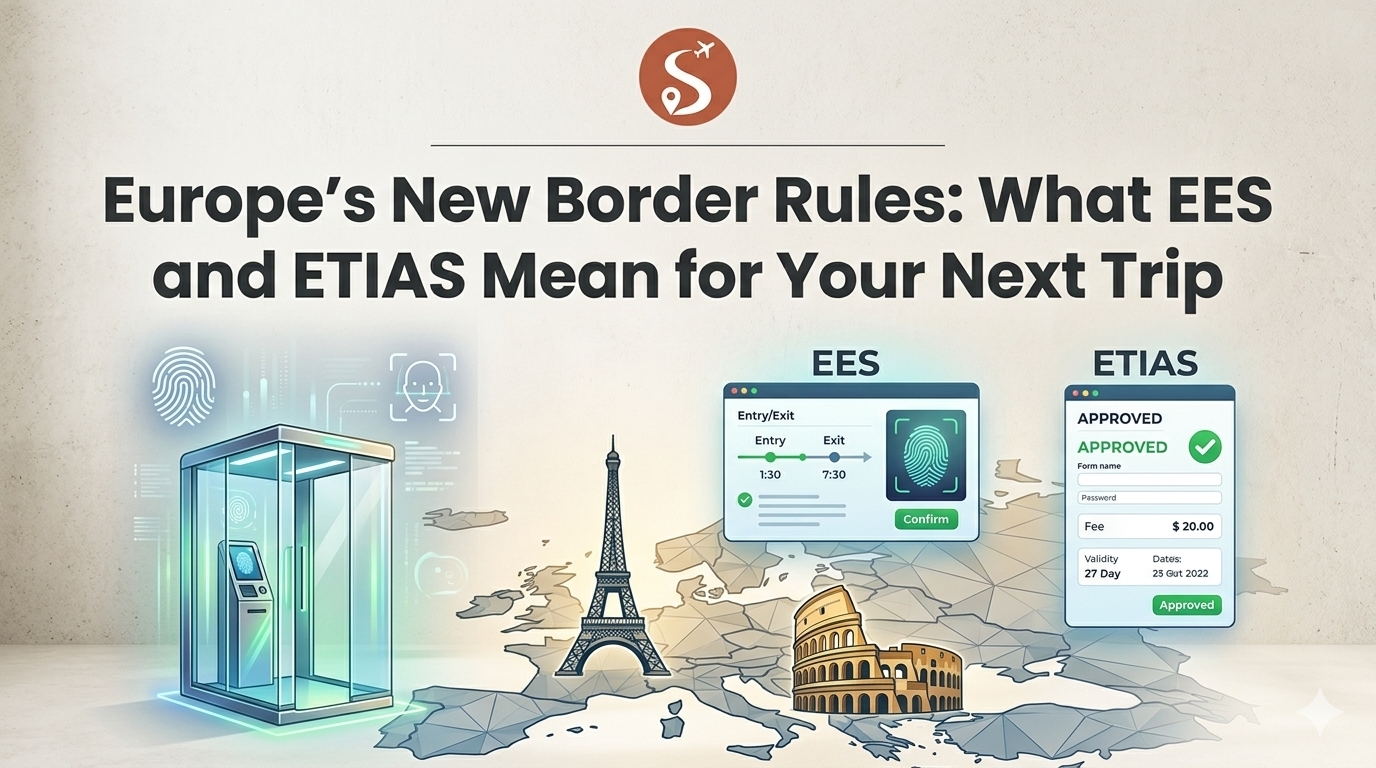
Europe's biometric entry system is already live, and a separate travel authorisation is still on its way. Here is what actually applies to you.
Europe is quietly changing how it welcomes visitors, and if you are planning a trip this winter or next spring, two acronyms are worth understanding: EES and ETIAS. They sound alike but do very different jobs.
EES is already live
The Entry/Exit System started rolling out on 12 October 2025 and was phased in across Schengen border crossings over the following months. Instead of a passport stamp, non-EU travellers now register at a border terminal, where a photo and fingerprints are captured. It applies both to visa-exempt visitors and to people travelling on a short-stay visa. Reports from the first months described long queues at some busy airports and land borders, so the practical lesson is simple: give yourself extra time.
ETIAS is the one still pending
ETIAS is a separate online travel authorisation for visitors who do not need a visa. It is planned to cost €20 and allow stays of up to 90 days in any 180-day period across 30 European countries. It was expected in the last quarter of 2026, but the official EU portal no longer states that target. It says only that the system is not yet operating and that a start date will be announced months in advance. Some industry reports now suggest it could slip into 2027. Until an official date is published, nothing needs to be done.

What this means if you hold an Indian passport
Indian travellers need a Schengen visa for Europe, and neither EES nor ETIAS replaces it. You will still apply for your visa as usual. At the border you will be registered under EES, but ETIAS is meant for visa-exempt nationalities, so it does not apply to you.

Smart steps before you fly
- Arrive early at your first Schengen airport, especially at peak times.
- Keep your passport valid well beyond your return date.
- Use official EU websites only. Look-alike ETIAS sites already exist and charge extra fees.
- Note that Ireland and Cyprus are not part of the EES checks.
Europe is still very much open. The border simply has a new, more digital front door.
Comments
Log in to view and join the conversation
Log in